
The usual order is backwards
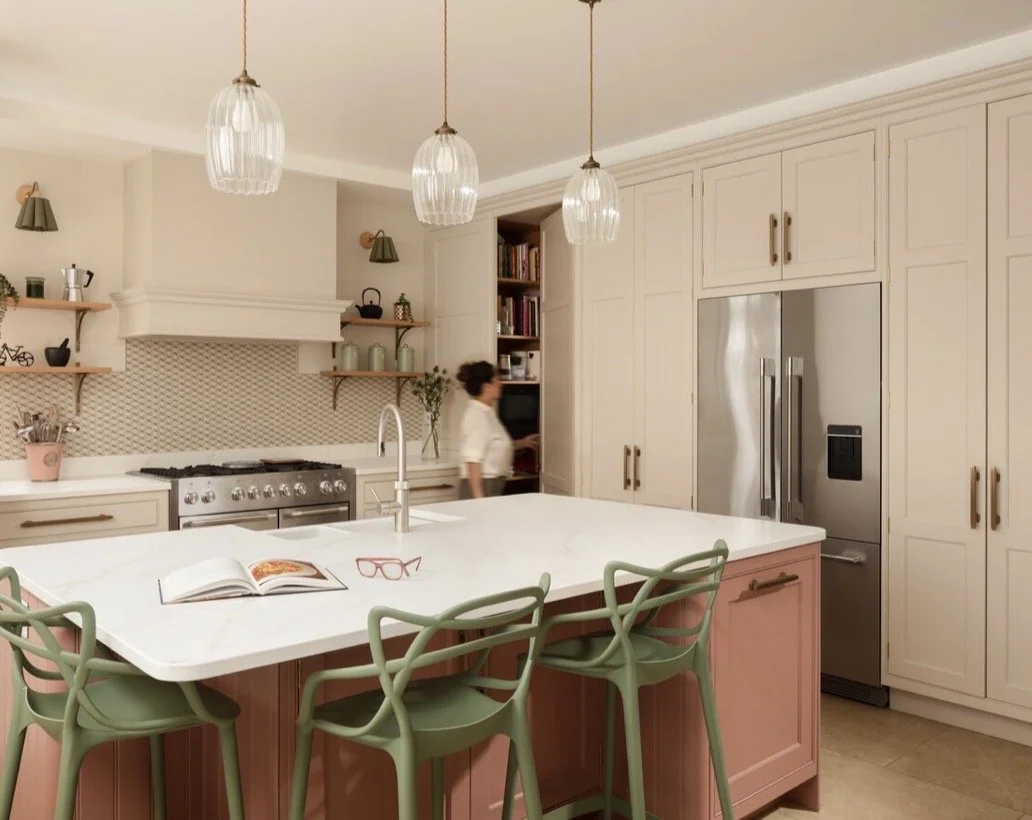
Shaker Style Kitchen in a Period Property in Barnes
The conventional route looks like this:
Get drawings done quickly
Submit the drawings for Planning Permission (or Permitted Development) while you get quotes from builders
Get approval, then think about how the space will actually look and feel.
By the time design questions surface and you start to think about light, proportion, how the new space meets the old, etc, the footprint is already fixed. You're now designing inside a box someone drew before anyone asked how you wanted to live in it.
Starting with design flips that. You decide what the space needs to do first, and the planning application becomes a faithful expression of a considered scheme not a rushed sketch you'll spend the next year working around.
Design-first saves money
On Design-Led renovations, you get the internal layout and design done first which means less changes in the future. Changes cost money, time and cause a lot of hassle. When the design is resolved before submission, you save on paying for revised drawings, re-submissions or the building delays that come from decisions made too late.
A considered design also gives your builder accurate information to price against. Vague plans invite vague quotes and vague quotes are where budgets quietly disappear.
Good design gets period homes approved faster
Planning officers are far more receptive to extensions that respect the existing building. A Victorian or Edwardian home, for example, has a rhythm. Its brickwork, rooflines and window proportions all follow rules and retaining their feature increases the value of the property. A design that understands those rules and responds to them sympathetically is far less likely to attract objections, conditions or an outright refusal.
This is especially true in conservation areas and for homes near listed neighbours, where a thoughtful, design-led application can be the difference between approval and a costly appeal.
Protecting what makes the house special
The reason you bought a period home is the reason it deserves a proper design process. Extensions that are bolted on without sensitivity flatten a property's character and, with it, its value. The best layouts are always those that feel part of the home, almost as though the new space was always meant to be there.
That doesn't happen by accident. It happens when design leads and planning follows. That is how you get the best out of project and your budget and make the most of your home.
Start with design
If you're planning an extension, loft conversion or internal renovation, talk to an Architectural Designer who listens to YOU and devises an internal layout that works for YOU, before you submit it to the Council. Spending extra time and attention in your internal layout at the beginning will save you time, money and headache afterwards. This will help your project get approved, give you less to worry about later, minimise changes during the construction phase and save you on construction time.
Paula, x
Considering an extension to your period home? Email us on studio@paulatrovalusci.co.uk to start a design that is built to be approved.
